
Sources, lineage and method
Roots
Meditative Healing arose through a long process of practice, study and personal encounter. Its roots belong to yoga, contemplative experience, spiritual transmission and depth psychology. The lineage described here is therefore not presented as a provable chain of historical succession. It is a living lineage of experience: the sources, teachers and encounters through which Jivan Mukta came to perceive, develop and articulate the work.
The historical account may remain open to interpretation. Its essential value lies in the light of experience carried through these encounters and made active in the practice of Meditative Healing.
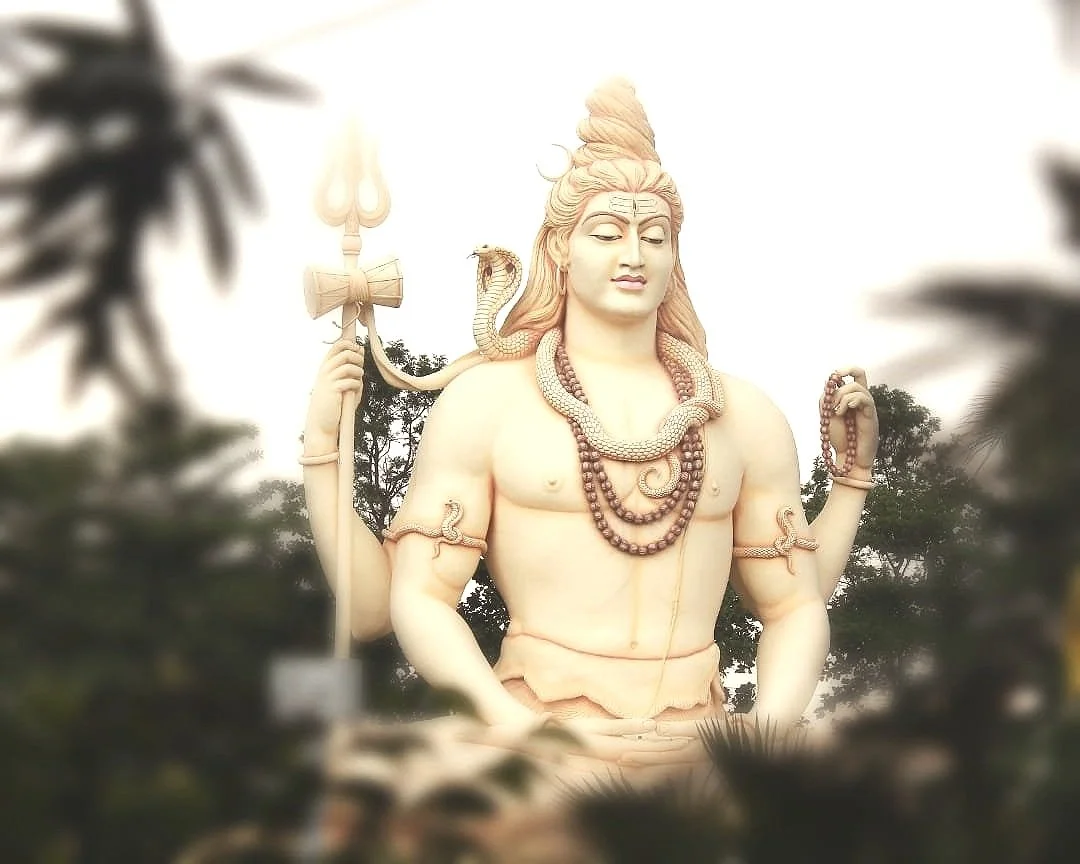
Historical and experiential roots
The Foundations of Meditative Healing
Classical yogic exploration
Patañjali offers an early and enduring map of the movements of mind, the obstacles that produce suffering and the disciplined inward journey toward greater clarity and wholeness. Meditative Healing shares this trust in direct inner observation: awareness is not merely an idea, but a capacity that can be cultivated.
Guru Nanak and Guru Ram Das
Sikhi is central to the spiritual foundation of Meditative Healing. Guru Nanak reveals a path of listening, Naam, remembrance and direct experience of the One. Guru Ram Das gives devotion a healing dimension: humility, prayer, service and grace create the space in which the human being can be restored. These are living principles within the method—deep listening, oneness, service, prayer and openness to divine intervention.
Baba Siri Chand and Baba Virsa Singh
Baba Siri Chand and Baba Virsa Singh are named here because of their direct relationship to meditative healing within Jivan Mukta’s experience. Baba Siri Chand embodies yogic mastery, inner emptiness and the subtle transmission of healing consciousness. Baba Virsa Singh placed the healing of the human mind at the centre of his teaching, emphasising Naam, prayer and mastery of mind—teachings preserved in Arrows of Light: Healing the Human Mind.
Meditative healing in modern practice
Gurudev Singh and Ambrosio Espinosa gave practical form to a meditative healing process through Sat Nam Rasayan. Jivan Mukta studied this work directly and brought its experiential understanding into dialogue with his own yogic practice, spiritual development and scholarly formation.
Experience, research and consciousness
Yoga begins with inner experience, but experience is not left unexamined. Through sustained practice, academic study, comparative religion and the investigation of consciousness, Jivan Mukta has interpreted and articulated the experiences that became Meditative Healing.
From 2004 onward, direct experience and research gradually converged. In 2011 Jivan Mukta began articulating a distinct approach, and the Meditative Healing Program™ developed as a structured path through which healing, consciousness and transformation could be practised, studied and shared.
The method
Three movements of meditative healing
The method does not attempt to impose healing or direct another person toward a predetermined result. It cultivates the qualities through which the healer can meet what is present with sensitivity, stillness and openness.
Deep sensory listening: the capacity to establish a profound connection and perceive through the five physical senses and through the sixth sense—the psyche. Sunié gathers these impressions before judgement or explanation, allowing the healer to perceive the person and the field of the encounter as an integrated whole.
Emptiness: the zero point of consciousness in which personal projection, judgement and mental activity no longer occupy the centre. Silence may arise within Shunia, but Shunia itself is the empty and receptive state through which awareness can perceive and healing can unfold.
Grace: when meditative capacity creates such clarity, connection and consciousness that divine intervention can enter the process. Kirpa completes what personal effort alone cannot accomplish, supporting transformation and the harmonisation of health.
Wholeness and psychological integration
Within Meditative Healing, Jungian psychology offers a language for understanding individuation, symbolic experience and the integration of what has been divided, rejected or left unconscious. It serves the method by clarifying patterns, wounds and the movement toward wholeness, while meditation and yogic practice provide the direct experiential processes through which presence, vitality and consciousness are cultivated.
In The Psychology of Kundalini Yoga, Jung approaches yoga as a process of psychological development and describes its practice as a form of psychic hygiene—a way of purifying and ordering the inner life. This perspective enters Meditative Healing in dialogue with, rather than in place of, yogic experience and spiritual depth.
Selected sources
Five points of entry
These sources do not constitute a closed doctrine. They allow readers to explore the yogic, experiential, scholarly and psychological ground from which the method has developed.
- Patañjali, Yoga Sūtras — a foundational map of mind, suffering, meditative discipline and liberation.
- Jivan Mukta, 3HO in the Light of Experience — doctoral research on experience, healing and the construction of meaning within Kundalini Yoga.
- The Saint and the Yogi — Jivan Mukta’s study of Baba Virsa Singh, Yogi Bhajan and spiritual transmission.
- Master Baba Siri Chand: The Sublime Steps of a True Yogi — historical reflection joined with Jivan Mukta’s personal experience of the master.
- C. G. Jung, The Psychology of Kundalini Yoga — a depth-psychological engagement with Kundalini, inner transformation and the development of consciousness.
“The tradition and the legacy left to us are a support and an assurance that Meditative Healing does not depend on a personality, an institution or a religion. It rests within a vaster field of awareness and healing energy, accessible through experience and practice.”
— Jivan Mukta
Roots

“By listening-the technology of Yoga and the secrets of the body are known”
– Guru Nanak
Meditative Healing™ is a technique derived from the ancient yogic practice of inner exploration. This journey led yogis to find a meditative path to healing. In this manner, the spiritual culture of India gave rise to powerful protocols that establish the health of body, mind and Spirit. Together with the western approach to deep psychology, this technique can be considered a modern expression of the evolving healing experience of humankind.
THE YOGIC TRADITION
Inner research conducted by Indian Rishis (sages) and yogis was synthesised by Patañjali (India, 2nd Century AD). He elaborated on the different modes of consciousness and a path to human wholeness through the method we know as Yoga. In the system of Patañjali we find a path to engage and achieve a pristine meditative experience, which leads us all the way to the wellness of the being.
“We may cultivate the power of concentration and remove the obstacles to enlightenment which cause all sufferings, this can be overcome through meditation”
– Patañjali
THE DEVOTIONAL MYSTICS
Later, a powerful emerging tradition was born in the well-known period referred as the “Bhakti Movement” (India, 15th Century). The Bhakti Movement exalted the dimension of devotion in the quest for a holistic/holy life. This movement was not caste-base and it gave ordinary people the chance to access the gifts of spiritual development and healing. The teachings of the Sikh Gurus highlighted the message of oneness and service that upgraded the Meditative Healing approach of Yogis. Then, Meditative Healing developed into a highly empowered system by the force of prayer and spiritual Grace.
"God's servants are capable of removing others' sorrow and pain"
- Sukhmani Sahib
ROOTS AND METHOD
Shunia
“Shunia is not merely silence. It is the stillness from which silence naturally arises—the zero point where awareness remains fully present, while the waves of the mind come completely to rest.”
THE MODERN TIMES
A known healer and Saint of this linage, Baba Virsa Singh, reached out and taught ordinary people the meditative ways to experience the healing process of mind and awareness. His teacher, the great Yogi Master Baba Siri Chand transmitted him an outstanding mission and power.
In 1968 Baba Virsa Singh sent one of his student, Yogi Bhajan, to North America in order to continue and expand this service. One of Yogi Bhajan’s students, Gurudev Singh from Mexico, along with the Doctor Ambrosio Espinoza from Spain crafted a practical understanding of this meditative process in the book Sat Nam Rasayan and an institution of the same name.
“Many diseases are cured by healing thought. Your mind is very powerful – if you gain control of your mind, you also have control of your whole body and of any disease”
– Baba Virsa Singh.
THE 21st CENTURY
Since 2004 Jivan Mukta, PhD began the study with Gurudev Singh, PhD and Dr. Espinoza and in 2011 he developed a unique and effective approach. Jivan Mukta decanted the key experience and principle of this healing legacy:
The Enhanced Experience of Self-Sensory Awareness (Sunié)
The Deep Experience of Silent Mindfulness (Shunia)
The Transformative Experience of Spiritual Grace (Kirpa).
Along with this, Jivan Mukta brought together the meditative, psychological, spiritual and emotional process into a healing shareable journey. This is the Meditative Healing Program™, a methodic path to experience a healing process, designed, launched and directed by him since 2012. Since that time, he has delivered the Program several times in Poland, Estonia, Finland, Spain, as well as Norway and Denmark. Meditative Healing as understood here, is a tool for modern secular people who are seeking a profound change and long lasting good health. Read more about Jivan Mukta.
“The tradition and the legacy left to us is a support and assurance that Meditative Healing does not depend on a person or personality, an institution or a religion, but rests on a vaster ocean of awareness and healing energy ready to be accessed by those who know-how.”
-Jivan Mukta